
By Emma Whymark and Lisa Poole
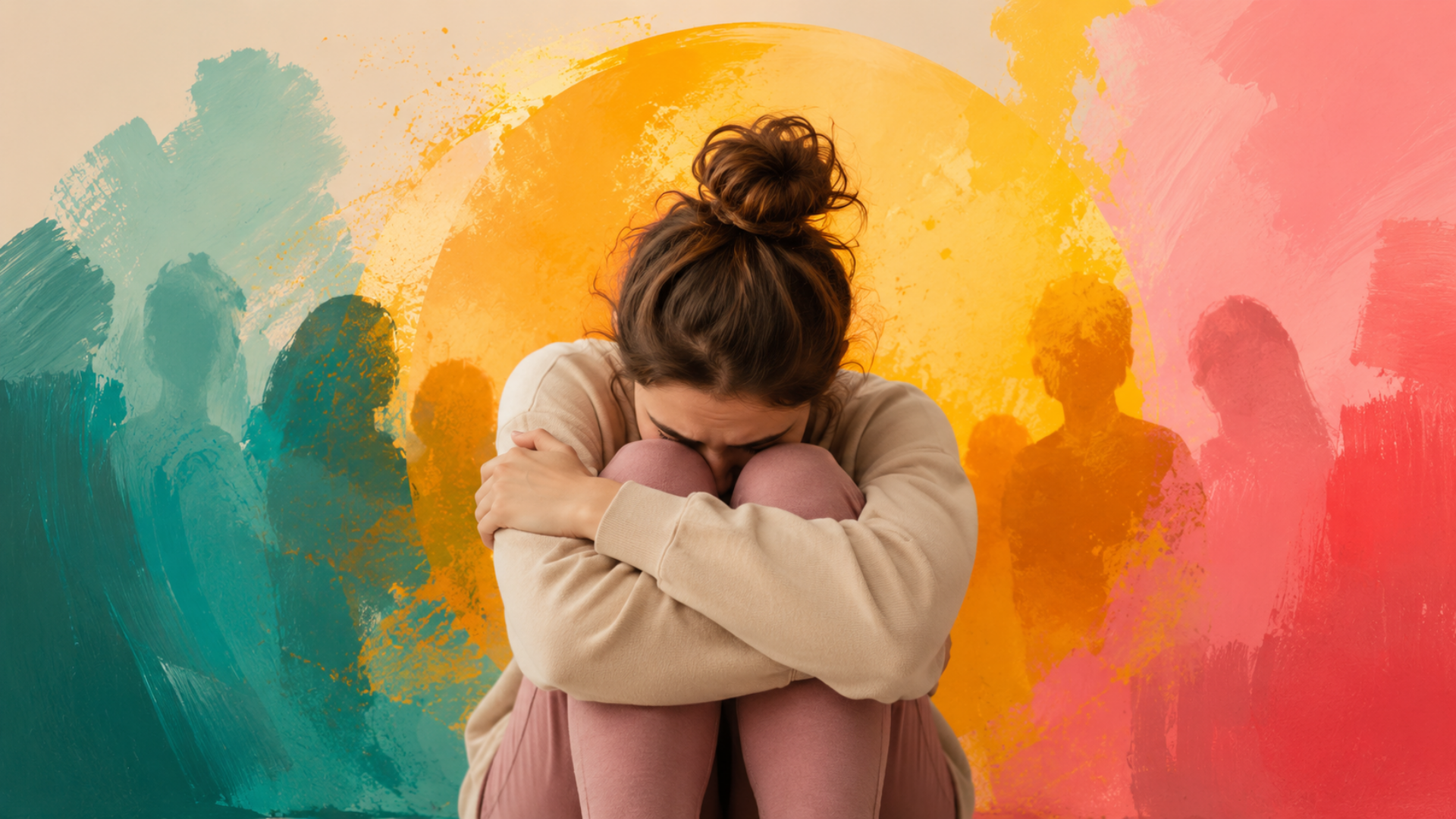
Most of us know that rejection hurts. Criticism, being left out, getting something wrong or feeling that we have disappointed someone are uncomfortable experiences for almost everyone. But for many people with ADHD, that response can feel much bigger, faster and harder to regulate. A delayed reply, a change in someone’s tone of voice or a piece of constructive feedback can suddenly feel loaded with meaning. What looks from the outside like an overreaction may feel, from the inside, like a very real threat.
Rejection Sensitive Dysphoria, or RSD, has become a familiar term within the ADHD community. We tend to think of it as the extreme end of a wider continuum of rejection sensitivity. Our brains are wired to notice threats to belonging because, historically, belonging meant safety. For neurodivergent people, repeated experiences of being corrected, misunderstood, excluded or simply feeling different can add another layer. Over time, it is easy to develop what we sometimes describe as a “rejection lens”, where the nervous system has become very good at spotting the possibility of rejection, even when the situation itself is ambiguous.
One way we explain this is through the idea of emotional sunburn. If you have badly sunburnt skin, even a light touch can hurt. A neutral touch can hurt. Someone can accidentally brush past you and it still hurts. Rejection sensitivity can be similar. Once the nervous system is already “burnt”, relatively small social experiences can land painfully. Understanding this does not mean that every interpretation is accurate, or that we remove all challenge and feedback. It means recognising that regulation often needs to come before reasoning.
There is another part of RSD that particularly interests us: people often describe it as physically painful. They talk about feeling rejection in their chest, heart or stomach rather than simply describing an upsetting thought. We became curious about what might be happening in that brain-body response and found ourselves exploring research around social pain, nervous-system activation and even the extraordinary phenomenon of Takotsubo syndrome, often known as “broken heart syndrome”. We are not suggesting these are the same thing, but the connection raises some fascinating questions about how emotional experiences become embodied, and why telling somebody that it is “all in their head” misses rather a lot.
For coaches, this matters because rejection sensitivity does not stay outside the coaching room. It can influence goal setting, feedback, accountability, boundaries and the coaching relationship itself. A client may withdraw, people please, become defensive, abandon a goal or assume that they have disappointed us. At the conference, we will be exploring what sits underneath these responses, why RSD can genuinely hurt, and what coaches can do both to reduce the likelihood of the “burn” and to support clients when it happens. Most importantly, we want to move away from “you’re too sensitive” towards a much more useful question: what is this nervous system trying to protect?
Want to explore RSD and rejection sensitivity in more depth? Join us at the ADHD Coaching Conference 2026, where Emma Whymark and Lisa Poole will both be giving talks exploring this topic and what it means for ADHD coaching practice. Find out more and book your place at the ADHD Coaching Conference 2026.
Click here to book.
See you there.