


You may have discovered that your partner, young person, house mate, or colleague has ADHD. What do you need to know? What can you expect? How can you approach working and living with them?
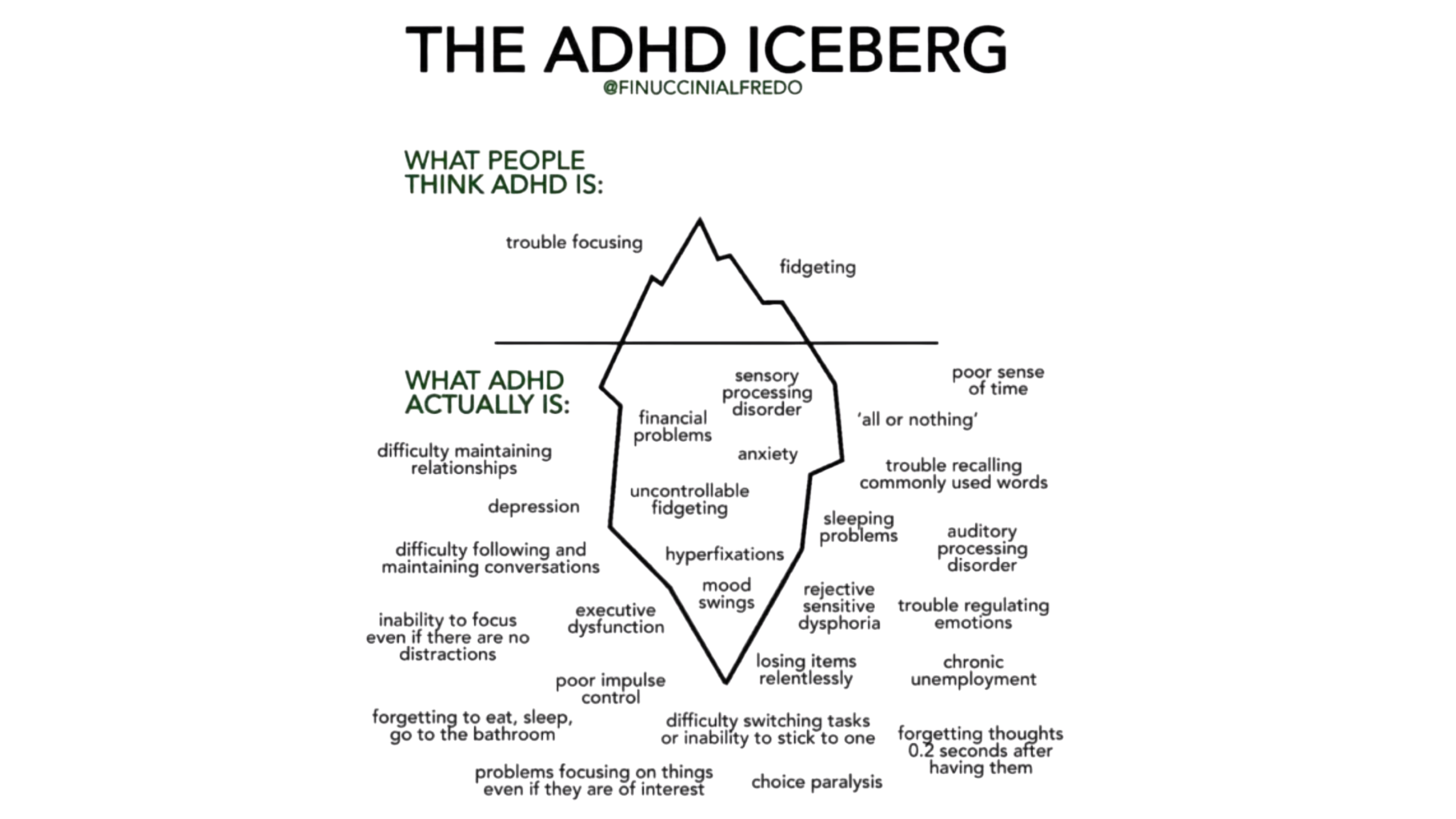
ADHD is not easy to understand if you don’t have it. There’s a simplistic idea out there that it’s about not paying attention and fidgeting a lot. Which it is. But check out this iceberg diagram. There is a lot more going on underneath the surface, and this iceberg metaphor is one of the best ways to understand it.
You may find yourself getting annoyed with your loved one. Why can’t they just ‘be on time,’ ‘get off the sofa,’ ‘put their keys in a safe place,’ ‘tidy up,’ ‘use a planner’ and so on. But it’s hard to get organised when you have executive disfunction. It’s hard to be on time when you are time blind. It’s hard to pay attention when you are bored or distracted. And it’s hard to put down the hobby you are hyperfocused on.
If you do get annoyed with them, they might feel extremely hurt as their rejection sensitivity kicks in. They might feel useless, incompetent and unworthy. They might feel guilty and hopeless. People with ADHD are prone to being bullied and manipulated and often blame themselves for things that go wrong.
So there are a few key approaches to take…
Educate yourself. Find out all about the condition, and how it impacts on your loved one. ADHD is not an excuse it’s a reason. They are not a bad / lazy / uncaring person, and they are not doing it on purpose. Forewarned is forearmed.
Have patience. Mitigate for the condition by planning ahead, talking things through, and trying to stay calm. Have strategies in place for being tidy, keeping organised, and being on time. But be aware that they may be prone to paralysis and procrastination and take this into account.
Accept them. ADHD does have some plus sides for some people and anyway it’s part of who they are. We have to accept the condition and the advantages and limitations that come with it. We all want to be loved and valued just as we are.
Find the humour. It sounds strange but some of our traits can be funny, quirky, or amusing. It’s better to laugh than get angry or frustrated, and the more you practise this the easier it gets. Search on TikTok and YouTube for videos about the funny side of living with someone who has ADHD.